Revelation Online Points To China For MMORPGs
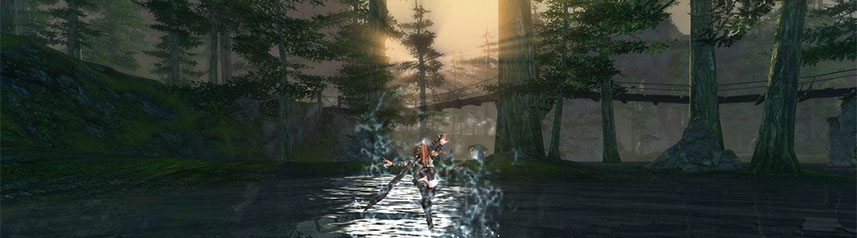
In the months leading up to Revelation Online’s open beta release there was extensive chatter in the MMORPG community. Forum posts asking about the game became quotidian. YouTubers covered every facet of the game’s universe, from classes to leveling to PvP to dungeons, by playing the already released Chinese version. Even MMOs.com was regularly asked “What are your thoughts on Revelation Online?” Then the game released, everyone swung their gavel with username inscribed on the side, and the hype—like with any game—evaporated. The pent-up excitement for an MMORPG that seemed new and different teaches an important lesson, regardless of what you think about Revelation Online, or the outcome: Chinese MMORPGs matter in 2017.
Before Revelation Online there was a gap in the MMORPG market, no big-deal-blockbusters were slated to release. Cynics loved to embody Paul Revere: “The genre is dying. The genre is dying! Told ya so, told ya so!” Plenty of indie titles were continuing to turn to Kickstarter to fund their dreams (and their supporters’), but bigger studios—Blizzard included—shied away from MMORPGs in favor of new concepts or sure-fire regurgitations.
The West seemed fed up. It’s easier, and cheaper, to make a Clash Royale spin-off than a fully fleshed out MMORPG universe. Players were hungry, and didn’t know where to look. Prior to 2016 the thought that a game imported from China could become home for Western MMORPG players wasn’t even a thought.
[singlepic id=64171 w=600 h=300 float=none]
One of the last major Chinese MMORPGs to release was Swordsman under Perfect World, a game received as a lukewarm re-skin of previous wuxia MMORPGs with the Arc Games logo. Of course, Perfect World’s games were not the first to find themselves Westward. Netdragon Websoft’s Conquer Online launched English servers back in January, 2004. You probably didn’t hear about it, because every kid who knew how to slot a graphics card was busy gushing over World of Warcraft. It’s the same story for many Chinese MMORPGs from the past: stuck in the shadow of Western rivals.
Shadows weren’t the only impediment to a Chinese MMORPG’s success.
There was also a stereotype of Chinese games (and it continues to pervade), as copy and paste products. Loosely clothed IP protection laws let studios take popular IPs and reskin them for sale. That’s how we got anime ripoffs like Unlimited Ninja Naruto and Marvel franchise capitalizations like Tiny Mighty Heroes Unite. Even today we find browser games borrowing from one another—a sphere where one game can be mistaken for any other. That stereotype blanketed every game from the Four Seas with a shrug.
[singlepic id=64220 w=600 h=300 float=none]
When Western players looked East, their eyes focused on Seoul. “Looked” is the key term. Korean games eventually lost their appeal. They came under fire for failing to innovate: the same themepark grinder experience again and again, without any of the charm of the early 2000’s games such as Ragnarok Online, a gem here and there that would widespread attention, e.g. Black Desert Online. And a few ports stuck out: Blade and Soul—a game released years after it should have been. Most fell to the wayside, one game after another making incremental progress on what players had already played, with too many choices all looking the same.
A lackluster Korean production cycle and Western skittishness regarding MMORPGs left players lost. Then something different showed up. Something that looked similar to other games but new enough to be attractive. A novelty that MMORPG players began to whisper about and then talk openly about: Revelation Online.
While Revelation Online is close to “revolutionary” in the dictionary, it doesn’t overlap with the concept on a Venn-diagram. But it is novel, a mashing of multiple tropes and elements from seemingly disparate MMORPGs in one package. And novelty different is enough to hold someone’s attention; novelty can be as alluring as a familiar love. Eastern and Western elements combine in Revelation Online’s world, and while not a designed for everyone. It’s mashing is a notable analogy for what’s currently happening in the MMORPG industry.
[singlepic id=64213 w=600 h=300 float=none]
Revelation Online released as a significant shift in the power players of the MMORPG market is taking place. More Western studios are bought by Chinese companies every day: Jagex and Riot Games are under the firms and Shandong Honda and Tencent respectively. Analytics firm Superdata Research predicts that “Chinese companies will scoop up 1-2 western publishers a month from here on.”
Revelation hasn’t reversed the course of Western apprehension about Chinese MMORPGs, but it has become the stepping stone that normalizes a Chinese MMORPG’s release, that shows it’s acceptable to throw your basket of hope behind a Chinese developed MMORPG. It was the first to do so. The first to have a hype train whose whistle everyone could hear. Revelation Online has re-paved the road from China to Western markets, opening a door in the wall that will let future projects like Moonlight Blade and Twilight Spirits pass through with hopeful—and as always cautious—anticipation. Revelation Online marks a time when players cast their gaze East beginning with China.
Related:


I've been playing games before I could walk, and MMOs since Earthlink 5.0, a terrible way to play. I bounce around between games a lot, from EVE Online back to Vanilla and forward to whatever Indie title can keep my interest.