eSports Report - Big Money In The World Of Competitive Gaming
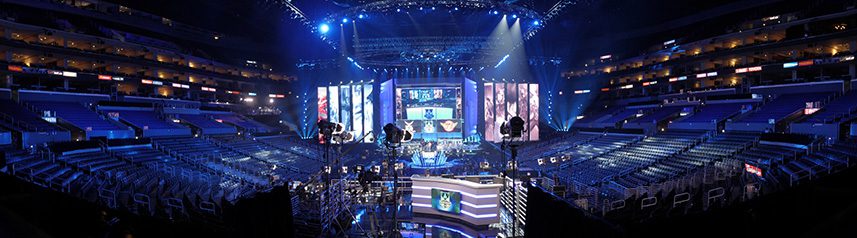
Whether you watch or not, eSports has become a huge part of gaming, an industry every publisher and major company has their eyes on. Lucky for us, SuperData has released their latest report highlighting the current state, and future, of eSports. Below I examine some of the report's highlights and speculate based on what information we have available at the MMOs.com team.
While eSports is growing the money-train has been a little slow in ascending the mountains. The markets grown $340 million in the last three years, sitting at a total $892 million eSports industry—not exactly numbers to scoff at. Big time publishers are easily able to take advantage, but when the pots split among everybody there's not much left for smaller publishers to eat. The market is expected to grow to $1.2 billion by 2019. Where's my share of the eSports phenomenon?
[singlepic id=56402 w=600 h=338 float=none]
It's no surprise that Asian continues to dominate eSports, particularly South Korea. China is paying attention. Tencent recently acquired a majority stake in Riot Games to no one's surprise—League of Legends is extremely popular in the People's Republic. But that's not all. Tencent also reportedly owns a portion of Glu Mobile and approximately 12% of Activision Blizzard. Plus, Tencent bought Clash of Clans developer Supercell for $8.6 billion. Tencent is the world's largest gaming publisher and I don't doubt they will soon be the largest investor in eSports globally.
Everybody wants a piece of that delicious eSports pie stuffed with money—Mom's homemade recipe. Big dogs like Coca-Cola and Nissan have been flexing their muscles for a couple of years now. Nissan entered the ring back in 2013, sponsoring Team Curse from League of Legends. Whereas Coca-Cola recently hired a project manager to coordinate eSports events. Every big company has their eyes on eSports. According to SuperData, tournament and player sponsorhips will cross the $661 million mark by the end of the year, "just 11% less than the NBA's sponsorship total for the 2014-2015 season."
[singlepic id=56401 w=600 h=338 float=none]
In the chart above you can see that betting and fantasy sites make up 7% of total eSports revenue, at a healthy $59 million. (I should start an eSports site and rig the bets.) The data releases only a few weeks after a lawsuit prompted Valve to target websites promoting gambling. While I don't think Valve's efforts endanger eSports betting (as it was unrelated to the eSports scene) I do predict some regulation in the future that may dampen gambling site profits.
Prize pools are growing. They finally hit $78 million this year, that's a 46% increase year-over-year. Big money. What's truly fun about prize pools is the way publishers are learning to fund them. Valve raised money for The International's prize pool by offering in-game content. Genius. Perhaps in the future companies won't even need to front any money to motivate their competitions. "Pay $9.99 or more and show off your Coca-Cola–Call of Duty swagger." Offering digital items to fund competitions is an easy way to off-set costs.
If you're under the age of 25 and older than 17 you are the prime eSport demographics. I missed the cutoff so slightly. Nearly half of all viewers fall between the ages of 18 and 24. I'm not surprised. Live streaming and eSports is a relatively new phenomenon, an experience older generations missed out on. Viewership is expected to increase by 14% by the end of the year, and the number will likely rise as more tournaments and events take place. More viewers does not necessarily more immediate money.
[singlepic id=56403 w=600 h=338 float=none]
But as the prime demographic ages they'll come into disposable income and be better able to afford event tickets, gamble, form fantasy teams, and throw their 9-5 cash at eSports. In ten years we should see a substantially bigger eSports scene as the young workforce ages.
eSports are not just for hardcore gamers. Filthy casuals are also hopping aboard. Simpler to understand titles like Rocket League allow anyone to watch a match and understand the rules without having played. Rocket League may be one of the best examples: soccer played by matchbox cars hurtling balls into the net. Silly rules and an inordinate skillcap make an entertaining watch for even my mother, who has never played a game outside of Solitaire.
One aspect of the free SuperData report that was not mentioned is mobile. I firmly believe that mobile gaming will eventually catch up to mainstream console and PC gaming. It will take time. An entire generation is being fed on mobile devices, viewing games like Clash of Clans and Vainglory in the same category as Counter-Strike and League of Legends. Once younger generations come of age I do believe that more publishers and advertisers will focus their attention. Tencent certainly believes in the future of mobile and so does Activision-Blizzard.
You can read a portion of the SuperData report on their website for free, or pay the $1999 for the full document (need some eSports money before we can do that).
Related:




From Mega Man II to Ape Escape, I've been playing games for as long as I can remember. I've spent months killing porings in Ragnarok Online and more recently lived a second life in Eve Online. I usually play as gUMBY, gUMBLEoni, or gUMBLes in-game.
