Are Ultra Widescreen Monitors Unfair?

I recently picked up a 21:9 monitor of the 2560x1080 variety after a friend talked it up by saying that 21:9 was “made for gaming”—and there was a deal that was too good to pass up. So far, it’s been great for productivity, allowing multiple windows to be open at reasonable sizes, and gaming feels much more natural with the wider viewing angle. As I’ve searched for what games support 21:9, what games need fixes, and what games are doomed to have black bars on either side for eternity, I’ve noticed a rather pervasive opinion: ultra widescreen monitors are considered to be unfair.
It feels like we’ve gone through this before. While I am having issues finding specific examples, I feel like this exact same argument occurred back when 4:3 was the standard and 16:9 was new. Wider viewing angle, lower adoption rate, obviously unfair. While I am not convinced that 21:9 will ever be adopted in the manner that 16:9 was, it still feels as if the argument has been long since exhausted.
However, there are a few companies that disagree with me, the most notable being Trion, XLGames, and Sandbox Interactive. While the 21:9 fix for ArcheAge does not require directly altering the game’s memory, and thus cannot be detected by the game’s anti-cheat, it does require manually altering the in-game Field of View and, as such, is rumored to be considered cheating of the bannable variety. Sandbox Interactive, on the other hand, have actively chosen to remove previous support for 21:9 monitors, allegedly on the basis that it gives an unfair advantage over 16:9. A fix has been created by the community, but it could be considered cheating, given the history of official support for the resolution.

In other sectors, some players will intentionally choose to play at lower resolutions. Whether to “ensure 60 frames per second” or to “enlarge your targets,” Counter-Strike: Global Offensive is known for having players that will intentionally play in 4:3 “because that’s what the pros do.” Depending on the person, both stretched and 1:1 varieties are used. I’ve known people that have done this and sworn they were doing better. Given the competitive nature of Counter-Strike and the “obvious advantage” claims that come from players of other games—some of Smite’s players bemoan the official support for 21:9 monitors—this would appear to be a very strong case for why it is not actually an unfair advantage.
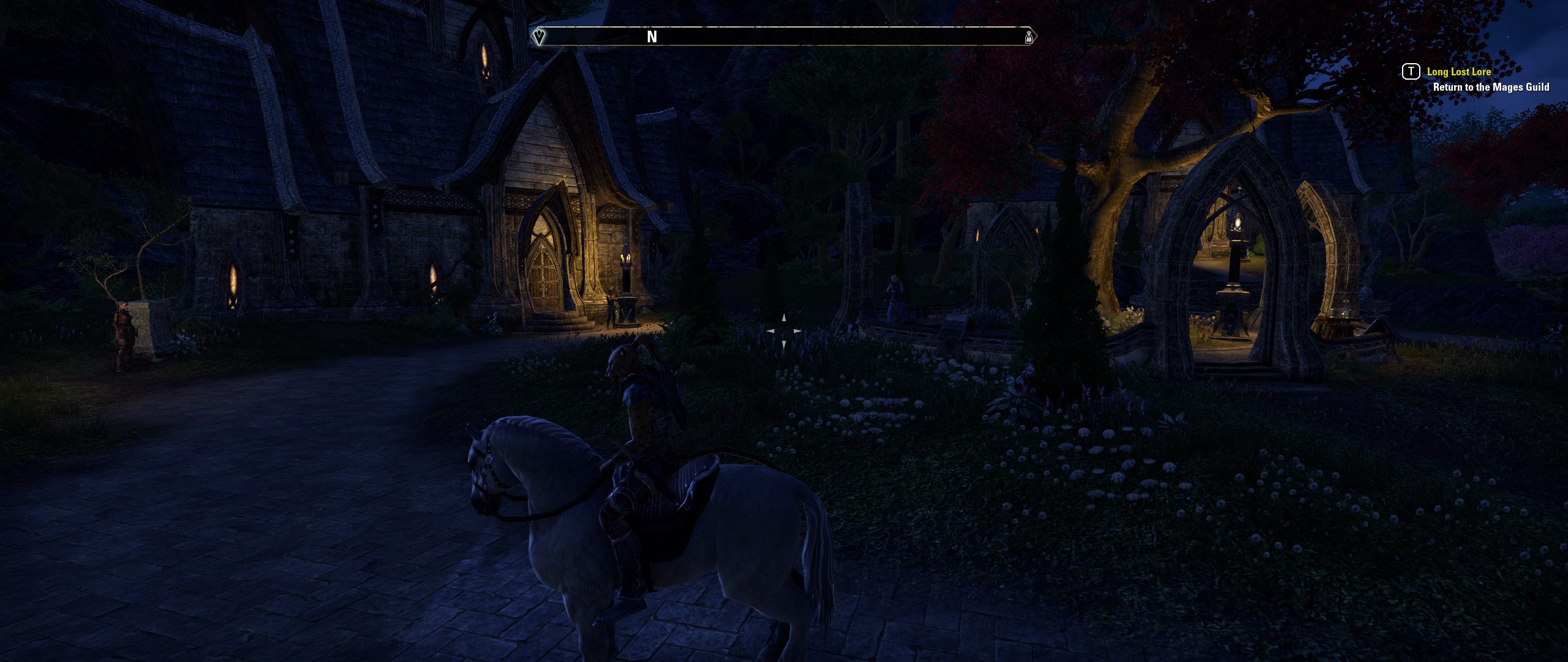
I feel that there is a vague possibility that wider resolutions may provide an unfair advantage, but also that the cases in which it does are extremely specific. In terms of MMORPGs, there are a few cases to be made. Most MMORPG players that I have seen play their game of choice on YouTube in a “serious” manner play zoomed out, quite far. Even most The Elder Scrolls Online players—which supports a first-person view and comes from a series famously known for its bad third-person experience—are seen playing in third-person. Whenever I watch videos of battles taking place in EvE Online, the player zooms out so far that each unit becomes a tiny speck on the screen that is all but invisible. While you may initially think “oh, but can’t the guy with the 21:9 resolution just zoom out, too, and get a wider viewing range?” Yes, but you also have to take into consideration that perhaps there is a point where you can already see your maximum effective range and anything else is just a bonus.
Most MMORPGs have a fairly limited range of attack and seeing a slightly wider range of view won’t give you any advantage after a certain point. Sure, you can see more, but what exactly can you do with that extra sight? How does it give you an advantage over swinging the camera slightly every so often? Many MMOs rely on an tab-targeting combat, which allows the mouse to remain free for camera movement.
There is a much stronger case to be made for MOBAs, but it is also debatable. Most MOBAs allow you to detach the camera from your player character and move it around independently. If you want to take a look at a specific area, detach your camera and click the minimap. Many MOBAs even have minimaps that show any area that can be seen by allies, including enemy positions. The case is still very conditional, appearing to be more of an issue of convenience and “reducing the number of clicks necessary to do x” than it is a true issue of balance.
The debate may never be settled. Even now, the odd person that is still gaming in 4:3 considers 16:9 monitors to be unfair to them. I’ve found that moving to 21:9 has significantly improved my gaming experience, but not because it has made anything easier. It simply feels more natural and brings a greater sense of awe to an already awe-inspiring titles. The amount of skill required to play a game doesn’t change and players that know this already have routines that work better for them than a wider viewing range would.
Do you think ultra widescreen monitors are unfair?
Related:


I've been playing MMOs since back in the day when my only option was to play Clan Lord on the family Mac. Since then, I've played too many MMOs to count. I generally play niche, sometimes even bizarre, MMOs and I've probably logged the most hours in Linkrealms prior to its current iteration. Currently bouncing between a few games.
