Rift is a 3D fantasy MMORPG set in the expansive world of Telara. The game offers a unique and extensive class system, player housing, and dynamic zone-wide events. Rift is feature-rich and well-suited for traditional MMORPG fans looking for a truly epic world to explore.
[singlepic id=4456 w=428 h=240 float=none]
Publisher: Trion Worlds Playerbase: Low Type: F2P MMORPG Release Date: March 1, 2011 PvP: Duels / Battlegrounds / PvP Servers Pros: +Massive amount of content to play through. +Rifts create dynamic gameplay experiences. +Extensive class customization. +Balanced cash shop. Cons: -Limited race selection. -Only a few builds viable in late game. -Generic MMORPG combat, user interface, and questing features.
Altas Reactor is a sci-fi themed 3D turn-based strategy game that offers a unique twist to the typical tactics game. Players utilize a revolutionary four-phase turn system to plan out their attacks and take out opposing teams in instanced close quarter battle arenas. Atlas Reactor offers a refreshingly unique art style and gameplay concept.
[singlepic id=52100 w=428 h=240 float=none]
Publisher: Trion Worlds Playerbase: Shut Down Type: 3D Turn-Based Strategy Modes: 1v1 - 5v5 Competitive / Bot Matches Release Date: October 04, 2016 Pros: +Simultaneous turns mean no waiting. +Requires tactical gameplay and teamwork. +Innovative concept and stylish animated art style. Cons: -Needs more characters (Freelancers). -Few maps. -Slight learning curve.
Smite is a 3D fantasy MOBA where players take on the role of mythological gods and battle in team-based arenas. Unlike most games in the genre, Smite has a third person camera view and keyboard controls that put players closer to the action.
[singlepic id=2685 w=428 h=240 float=none]
Publisher: Hi-Rez Studios Playerbase: High Type:MOBA Release Date: March 25, 2014 Pros: +Fresh take on the MOBA genre. +Active competitive scene. +Varied game modes and playable Gods. +Balanced cash shop, no gameplay advantages for sale. Cons: -Must unlock new Gods with in-game currency or cashshop. -Steep learning curve.
The unthinkable has happened. After four years as the undisputed king of the Korean gaming scene, League of Legends finally has a viable contender to the throne. Thanks the Blizzard Entertainment's heavy focus on promotions and discounts to PC Bang (LAN Cafes) in Korea, Overwatch has rapidly been accumulating market share.
Just yesterday, on June 15, 2016, Overwatch inched 0.40% ahead of League of Legends to claim the top spot for the first time. As reported by Erik Lonnquist:
Via @Calycae. Overwatch appears to have overtaken LoL in Korean PC Bang Shares. The first major shift in 4 years. pic.twitter.com/6XwNZ88wKK
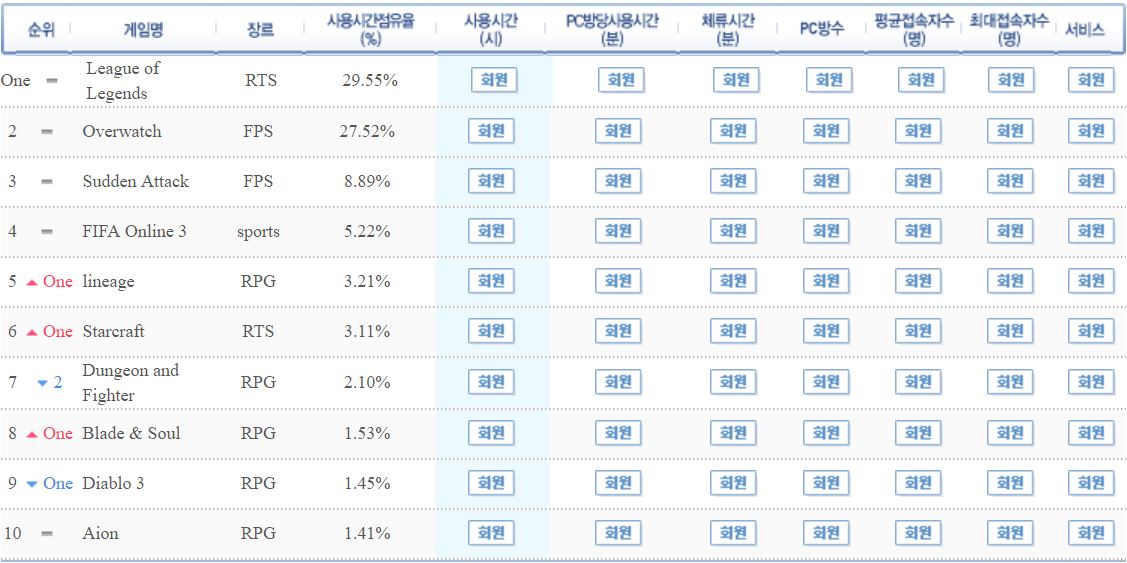
As of this posting, LoL has reclaimed the top spot (29.55% vs 27.52%) and it is far too soon to say whether Overwatch can maintain its popularity following the initial launch hype. But however this plays out, it represents the first serious shakeup of the PC Bang scene in four years. The usual suspects round out the rest of the top 10 list and can be seen by anyone over at Gametrics:
The temporary lead Overwatch pulled over League of Legends has sparked conversations across the web. Players looking to read more about the situation should check these reddit threads:
Argo is a free to play tactical shooter built on the same engine as ARMA 3. Take part in mainly 5v5 competitive matches as either the Clouds or Flames factions on the highly detailed Mediterranean island of Malden.
[singlepic id=69942 w=428 h=240 float=none]
Publisher: Bohemia Interactive Playerbase: Shut Down Type: Tactical Shooter Release Date: June 22, 2017 Pros: +Realistic, tactical gameplay. +Built in Map Editor. +Tons of gear & weapons to unlock. Cons: -Steep learning curve. -Optimization and UI issues. -No jumping mechanic. -Declining playerbase.
Mabinogi is an anime-inspired 3D fantasy MMORPG with hand-drawn character art and a multitude of original game features. Live your own fantasy life in Mabinogi by building a homestead, raising animals, composing music, stitching clothes, and even getting married.
[singlepic id=7501 w=428 h=240 float=none]
Publisher: Nexon Playerbase: Medium Type: MMORPG Release Date: March 27, 2008 (NA) PvP: Duels / Arenas Pros: +Unique art style. +Skill-based progression. +Many social and noncombat features. +Supportive community. Cons: -Several restrictions placed on free players. -Steep learning curve. -Many quest, combat, and graphic bugs. -Pet and combat balance issues.
First-person shooters are regarded as mainly a Western genre. Asians hold the top spots in RTS games like Starcraft 2 and MOBAs like League of Legends, but the best Counter Strike: Global Offensive players usually hail from North America and Europe. Many Asians even get motion sickness when they play FPS games for prolonged periods of time. The popularity of console gaming is another piece of evidence to support this claim. Halo, Call of Duty, and Battlefield are all popular FPS titles that dominate on PlayStation and Xbox consoles which are mostly played by Western audiences.
[singlepic id=3036 w=600 h=338 float=none]
South Koreans Dominate the League Scene
But this narrative falls apart when one digs a little deeper. Some of the world’s most popular shooters are actually from Asia. They tend to be older and have lower system requirements and so haven’t shown up on the radar’s of many Western gamers, but many of them are playable worldwide. The Korean developed FPS Crossfire has the second highest annual revenue ($1.1B) of any oCounternline game, mainly due to its popularity in China. In South Korea Sudden Attack remains one of the most popular games of choice at PC Bangs (LAN cafes) across the nation. In fact, a sequel titled Sudden Attack 2 is currently under development with refreshed graphics and other features. If done properly, it may make its way to America and introduce a whole new market to the popular franchise.
[singlepic id=16659 w=600 h=338 float=none]
CS:GO - The #1 Western Competitive FPS
It's important to note that games like CrossFire and Sudden Attack aren’t cutesy, anime style shooters. They’re very much modern, tactical shooters that look and play like Counter-Strike. What sets them apart, however, is the fact that they are free to play and have dated graphics. This allows hundreds of millions of gamers across the developing nations of Asia to experience the game, even on dated hardware and without having to drop a dime. As the revenue figures show, free to play doesn’t mean free from profit.
Besides the lower barrier to entry, the other key distinguishing feature between Asian and Western shooters are their cash shops. When cash shops or item malls are present in Western shooters, they mainly center around cosmetics such as equipment ‘skins’ and costumes. Even genre leader CS: GO now includes lockboxes and item drops. But in Asia things are very different. Players can purchase more powerful guns and ammo straight from the shop. The outcry against ‘pay to win’ is quieter.
[singlepic id=14046 w=600 h=338 float=none]
CrossFire Grossed over $1 billion in 2015
It was once thought that differences in tolerance levels towards pay to play vs pay to win were purely cultural—that something in the Western tradition favored fairness while Asian culture was craven to the all mighty dollar. Recent developments in the mobile gaming front have discredited that disturbing and racist thesis. As it happens, free to play gamers across America and Europe are eagerly spending billions in games like Game of War to gain a clear advantage over their non-spending rivals. Based on this evidence, it seems far more likely that the aversion to pay to win has more to do with age than culture.
Gamers who grew up playing MMOs during the subscription era have grown accustomed to virtual worlds totally removed from the real world. Younger gamers who knew nothing but cash shops see no distinction between the two. Of course someone who spends more money will have access to a more powerful sword or gun. Just as someone who spends more money on a car will have a stronger and more powerful car. As younger games in the West continue to outnumber the old guard, we should expect Western hostility towards p2w features to subside. That means many Asian shooters will make their way to our shores and that many Western developed games of the future will be more easily compatible with Asia’s existing monetization models.
MMORPG players are a cynical and nostalgic bunch. We expect new features and bug fixes on a consistent schedule, but are quick to blame the developers if our favorite aspect of the game is drastically changed. Often this nostalgia is misplaced. Expansions tend to break MMORPGs up into epochs, and we've all got our favorite ones. So with that in mind, lets discuss some of the best and worst MMORPG expansions.
Its easy to pick at the worst ones -- Star Wars Galaxies New Game Enhancements (NGE) threw away everything that made the game unique and bolted on a completely different class system. Other expansions had mixed results. MapleStory's Big Bang changed the whole game world and vastly reduced the grinding time required to reach higher levels.
Now comes the hard part. Expansions that actually improved things. I have to dig deep in my memory to come up with one: EverQuest: The Ruins of Kunark. I hope the rest of you are not quite as cynical as me!
What Is Your Most And Least Favorite MMORPG Expansion? Let us know in the comments section below!
Roblox is a multi-genre sandbox MMO marketed towards children and teens in which players can create their own virtual worlds or visit other worlds through the Roblox hub website. Part social network and part sandbox game, players can make new friends, chat, and jump into any game for free.
[singlepic id=25043 w=428 h=240 float=none]
Publisher: Roblox Corporation Playerbase: High Type: Sandbox MMO Release Date: September 28, 2006 Pros: +Open ended game builder. +Tons of customization options. +User-created games span many genres. Cons: -Many features are subscriber only. -Editor has a steep learning curve. -Dated visuals and lag issues.
Quick, when you hear eSports coverage, what sources come to mind? Team Liquid? Gosugamers? How about Yahoo? That's right, eSports fans can party like its 1999 on the newly launched Yahoo eSports portal. Buoyed by the growth of streaming services like Twitch.tv and multi-million dollar tournament prize pools, eSports revenues are expected to reach $2 billion annually by 2018. That sort of money was bound to attract mainstream stream attention eventually.
Yahoo joins other traditional sports media companies like ESPN which have jumped into eSports coverage. While Yahoo is mainly known for its now obsolete search engine and email client, the company still operates several successful niche portals including Yahoo Finance and Yahoo Sports. The Yahoo portal is still very new, but already looks very impressive. The scope of coverage seems broad with Counter-Strike Global Offensive, Dota 2, Heroes of the Storm, League of Legends, and Street Fight V getting header coverage.
Yahoo's move follows Activision Blizzard's purchase of Major League Gaming (MLG) earlier this year. The site promises to offer news, analysis, live commentary, and game strategies. Check out the quality of coverage yourself on the official portal, to view the embedded intro video below: